Subscribe to our ▶️ YouTube channel 🔴 for the latest videos, updates, and tips.
3rd Grade Ascending and Descending Order (Examples, Games, Video & Worksheets)
Understanding ascending and descending order is an important math skill for 3rd-grade students. It helps children organize numbers, compare values, and build strong problem-solving abilities.
- Home
- 3rd Grade Math
- 3rd Grade Ascending and Descending Order
What is Ascending Order?
Ascending order means arranging numbers from the smallest to the greatest.
For Example:
Numbers: 145, 5032, 6015, 6255, 9245, 9836
Now arrange the above numbers in ascending order:
145 < 5032 < 6015 < 6255 < 9245 < 9836
- Start with the smallest number
- End with the biggest number
What is Descending Order?
Descending order means arranging numbers from the greatest to the smallest.👉
For Example:
Numbers: 145, 5032, 6015, 6255, 9245, 9836
Now arrange the above numbers in descending order:
9836 > 9245 > 6255 > 6015 > 5032 > 145
- Start with the biggest number
- End with the smallest number
How to Arrange Numbers Easily?
Follow these simple steps:
1. Count the digits
- Numbers with fewer digits are usually smaller.
- For Example: 145 (3 digits) is smaller than 5032 (4 digits).
2. Compare place values
Look at digits from left to right:
- Thousands → Hundreds → Tens → Ones
3. Compare step-by-step
- Compare the thousands place first
- If equal, move to hundreds, then tens, then ones
Step-by-Step Method to Arrange the Numbers in Ascending and Descending Order:
1. Arrange the following numbers in ascending order: 9245, 9836, 5032, 6255, 6015, 145
Solution:
Step I: Arrange the numbers in the place value chart as shown below and observe it. There are five 4-digit numbers and one 3-digi number
Step II: The 3-digit number will be the smallest.
So, compare the 4-digit numbers.
Step III: Starting from the left, compare digits at the thousands place.
You will notice 9 > 6 > 5
There are two numbers with digit 9 at the thousands place and two with 6 at the thousands place.
Step IV: Compare the hundreds digits of these two numbers.
Thus, ordered from smallest to largest, the numbers are:
145 < 5032 < 6015 < 6255 < 9245 < 9836
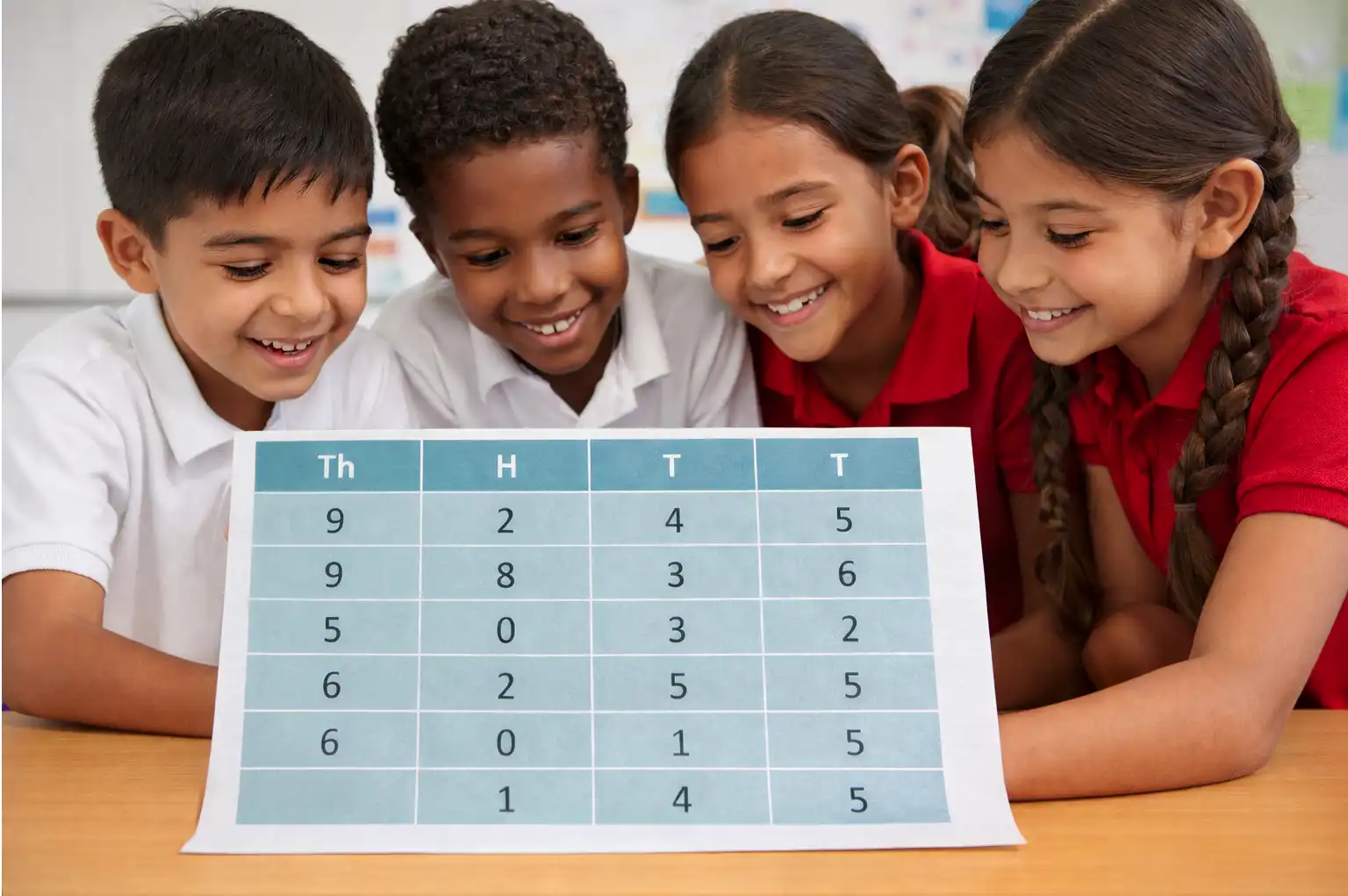
2. Arrange in Descending Order: 9245, 9836, 5032, 6255, 6015
Step-by-Step Solution:
I: Look at the thousands place (Th):
9, 9, 5, 6, 6
II: Largest thousands digit is 9, so numbers starting with 9 come first:
→ 9836, 9245
III: Compare these two: 9836 > 9245
IV: Next largest thousands digit is 6:
→ 6255, 6015
6255 > 6015
V: Last number is:
→ 5032
Final Answer (Descending Order):
9836 > 9245 > 6255 > 6015 > 5032
Ascending and Descending Order GAME:
Drag & Drop Order Game
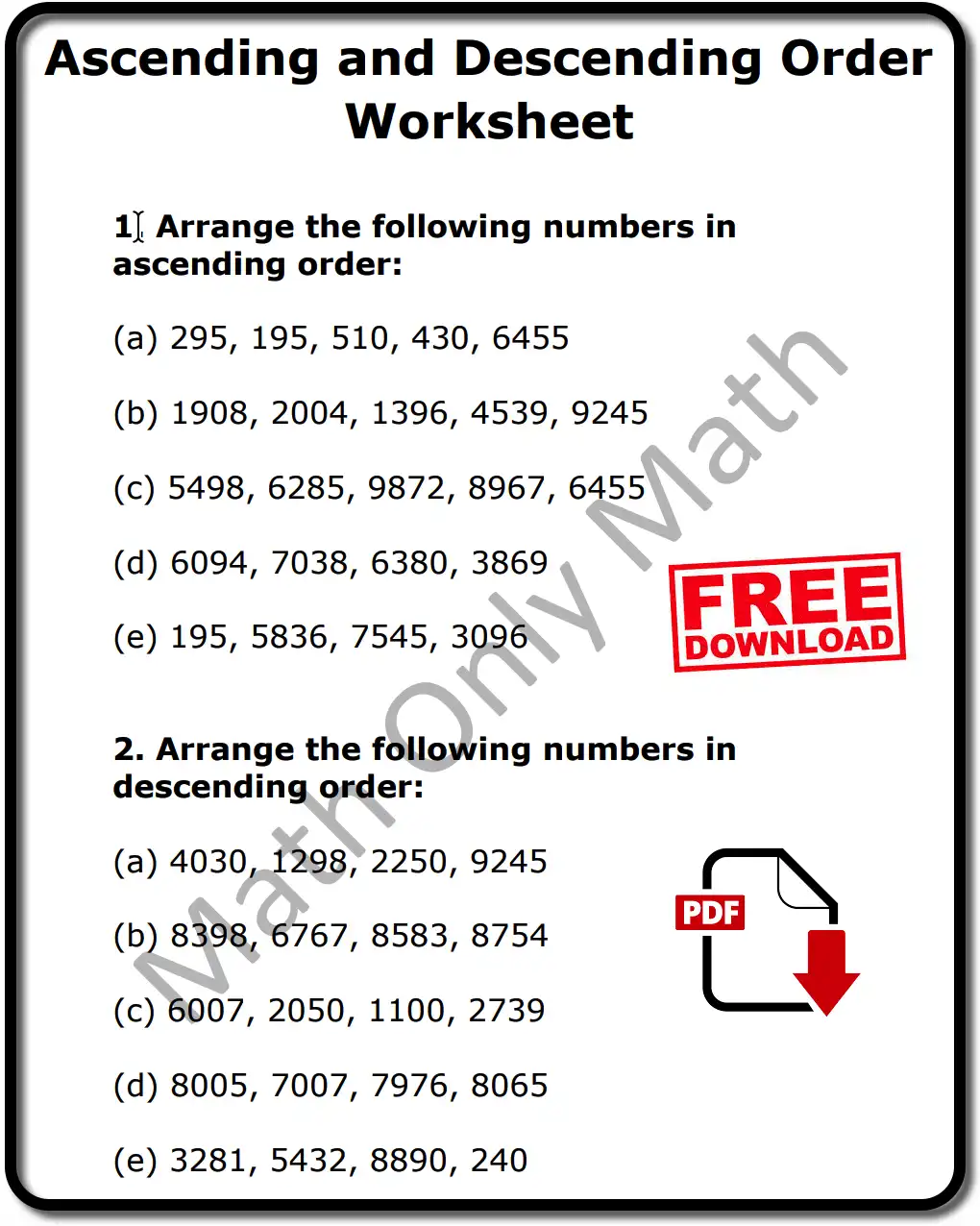
Ascending and Descending Order Worksheet

Ascending and descending order are simple but powerful math skills for 3rd graders. With regular practice and clear understanding of place values, students can easily arrange numbers correctly and confidently.
1. What is ascending order for 3rd grade?
1. What is ascending order for 3rd grade?
Answer:
Ascending order means arranging numbers from the smallest to the greatest.
Example: 1202, 2315, 4428, 9530
2. What is descending order for 3rd grade?
2. What is descending order for 3rd grade?
Answer:
Descending order means arranging numbers from the greatest to the smallest.
Example: 5490, 4348, 2125, 1012
3. How do you arrange 4-digit numbers in order?
3. How do you arrange 4-digit numbers in order?
Answer:
To arrange 4-digit numbers:
- Compare the thousands place first
- If equal, compare hundreds, tens, and ones
- Arrange based on smallest (ascending) or largest (descending)
6. Why is place value important in ordering numbers?
6. Why is place value important in ordering numbers?
Answer:
Place value helps you compare numbers correctly by checking digits from left to right (thousands, hundreds, tens, ones).
7. What is the difference between ascending and descending order?
7. What is the difference between ascending and descending order?
Answer:
- Ascending order: smallest → greatest
- Descending order: greatest → smallest
From 3rd Grade Ascending and Descending Order to HOME PAGE
Didn't find what you were looking for? Or want to know more information about Math Only Math. Use this Google Search to find what you need.



