Subscribe to our ▶️ YouTube channel 🔴 for the latest videos, updates, and tips.
2nd Grade Before, After and Between Numbers
Understanding before, after, and between numbers is an important part of 2nd grade math. These skills help children build strong number sense, improve counting ability, and prepare for addition, subtraction, and place value concepts. When students know how numbers are ordered, they can work more confidently with number lines, patterns, and problem-solving activities.
This page is designed to help 2nd grade students, parents, and teachers explore the meaning of before, after, and between numbers through clear explanations, simple examples, and fun practice ideas.
What Does 'Before' a Number Mean?
The number before is the number that comes just one step earlier when we count.
A number just before any number is one less than it.
For Example:
If we count numbers like: 6, 7, 8
The number before 7 is 6.
The number before 8 is 7.
More examples:
The number just before 10 is 9.
The number just before 25 is 24.
The number just before 100 is 99.
In 2nd grade, students often work with numbers up to 100 or even 1,000. Finding the number before usually means subtracting 1.
Therefore,
Number before a given number = that given number – 1
Practicing “before number” helps children understand counting backward, which is very useful for subtraction.
What Does 'After' a Number Mean?
The number after is the number that comes just one step later when we count.
A number just after any number is one more than it.
For Example:
If we count numbers: 12, 13, 14
The number after 12 is 13.
The number after 13 is 14.
More examples:
The number just after 30 is 31.
The number just after 49 is 50.
The number just after 99 is 100.
The number just after 199 is 200.
Finding the number after usually means adding 1.
Therefore,
Number after a given number = that given number + 1
This skill strengthens forward counting and supports addition concepts.
Practicing “after number” helps children understand counting forward, which is very useful for addition.
What Does 'After' a Number Mean?
A number between two numbers is the number that comes in the middle of them when counting.
A number between two numbers is in their middle.
For Example:
If we count numbers: 8, 9, 10
The number between 8 and 10 is 9.
More examples:
The number between 14 and 16 is 15.
The number between 49 and 51 is 50.
The number between 299 and 301 is 300.
When numbers differ by 2, there is one whole number between them. In 2nd grade, students mainly practice finding the missing number in simple number sequences.
This skill is very important for understanding number order, number lines, and patterns.
Why Are Before, After, and Between Numbers Important?
Learning these concepts helps children to
(i) Understand number order
(ii) Count forward and backward easily
(iii) Build strong number sense
(iv) Prepare for addition and subtraction
(v) Read and use number lines correctly
(vi) Recognize number patterns
(vii) Solve missing-number problems
These basics are the foundation for future math topics like place value, rounding, and mental math.
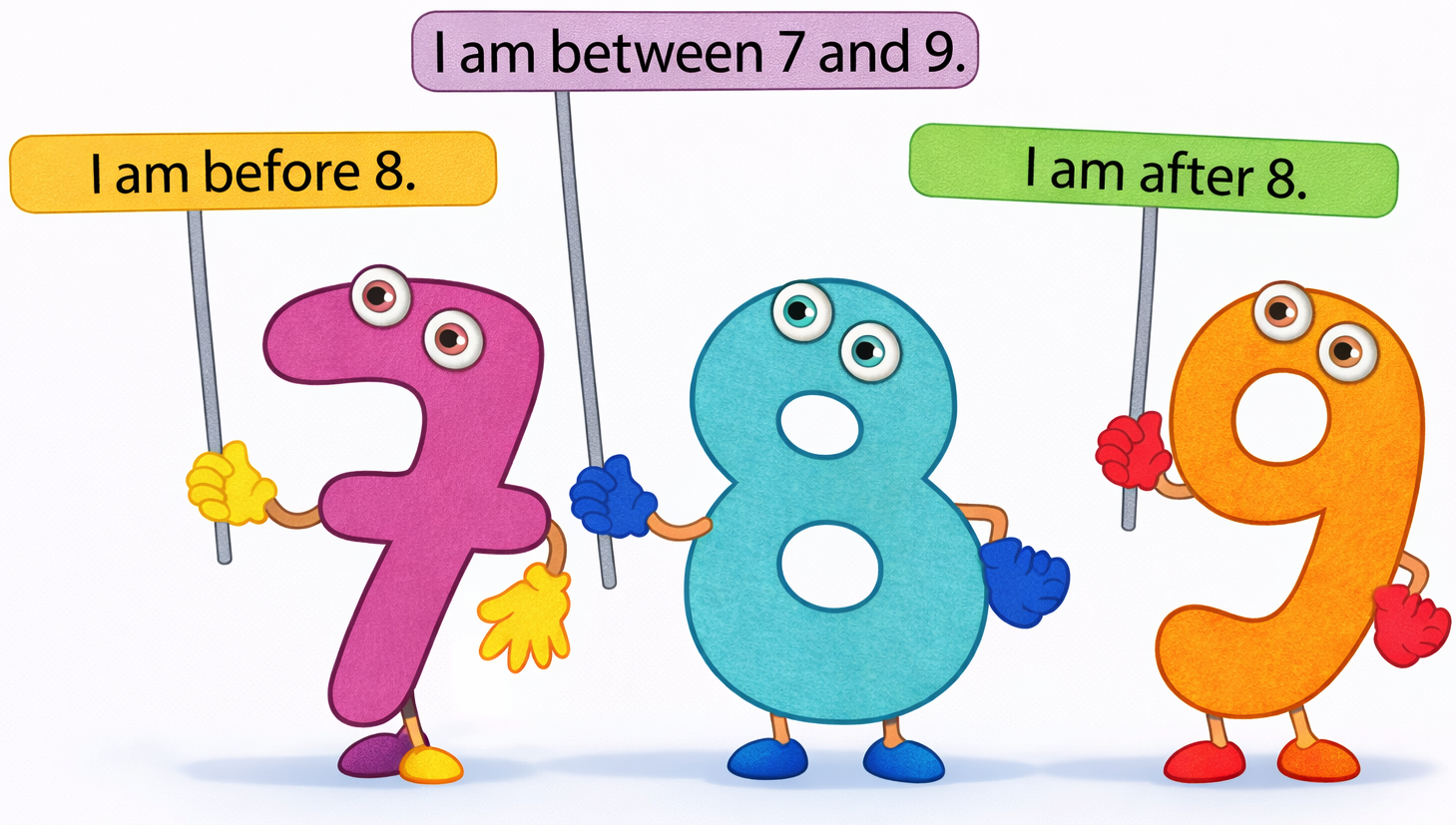
Using a Number Line to Learn Before, After and Between Numbers:
A number line is one of the best tools to teach before, after, and between numbers.
On a number line:
Numbers to the left are “before”
Numbers to the right are “after”
The number in the middle is “between”
Number lines help children see how numbers move forward and backward. Teachers and parents can draw simple number lines at home or use floor number lines so children can jump and count.
Look at the number line.
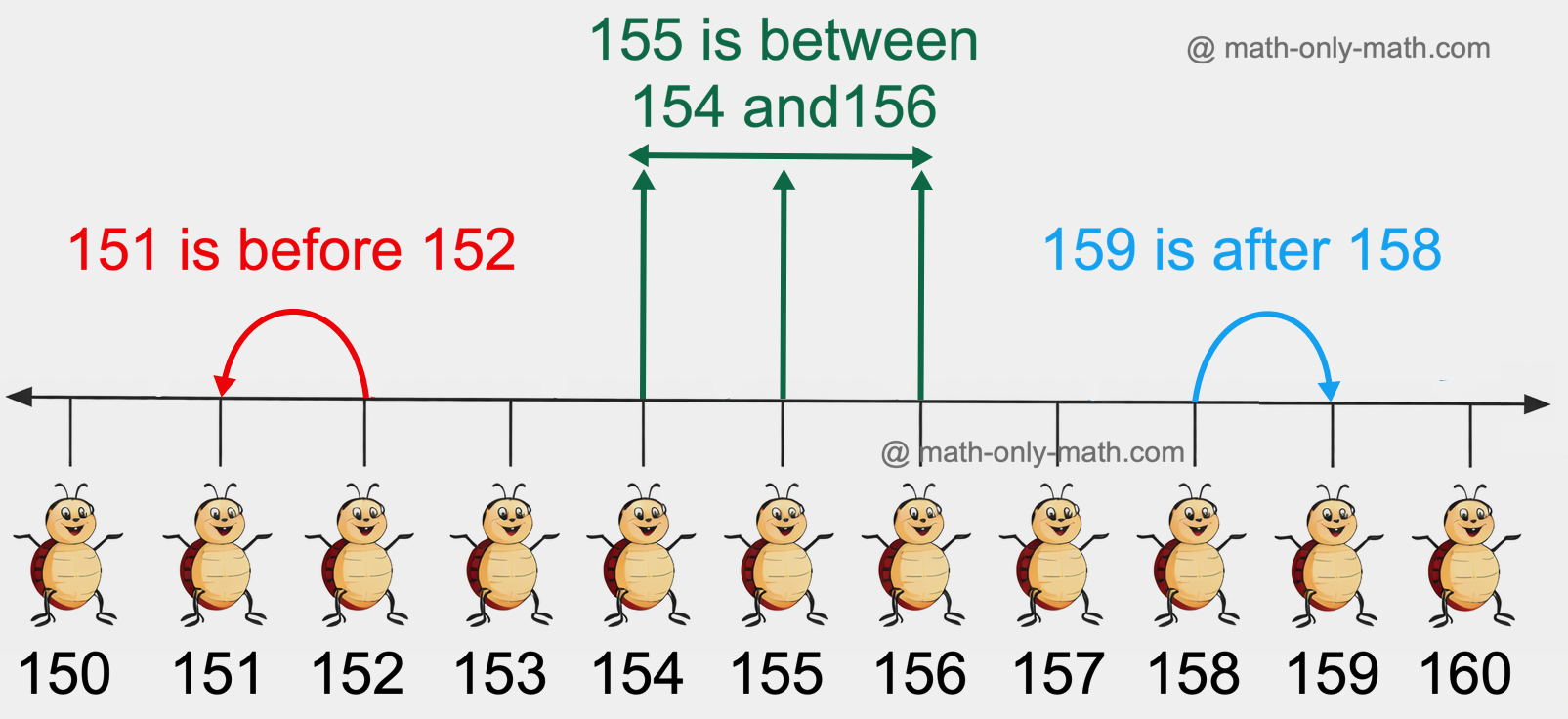
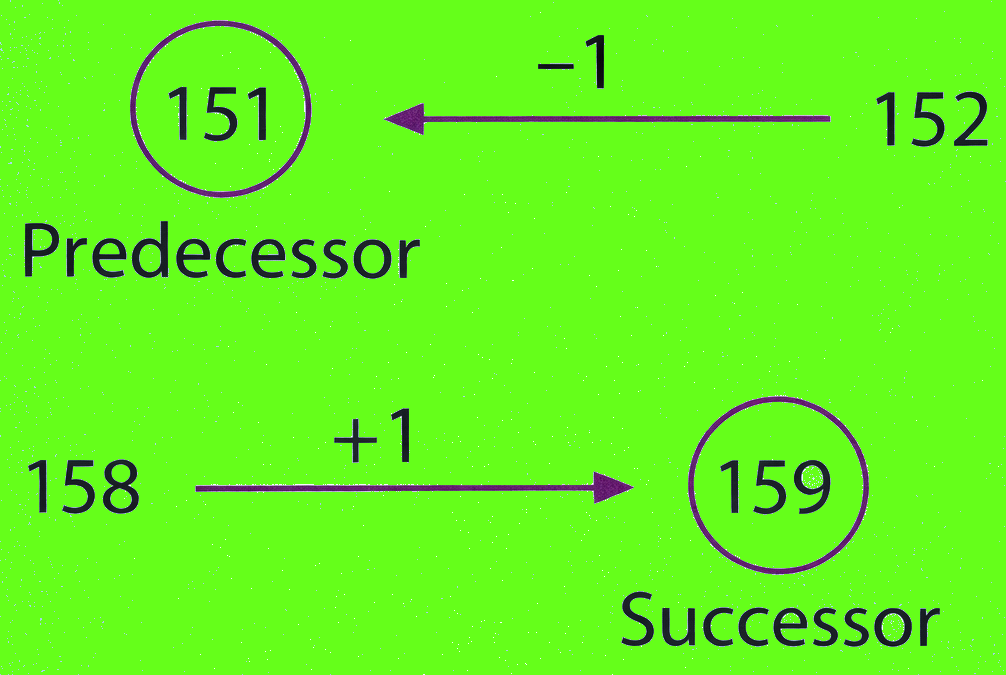
👉 151 is before 152. It is called the predecessor of 152. To find the predecessor, we subtract 1 from a number (152 - 1 = 151).
👉 159 is after 158. It is called the successor of 158. To find the successor, we add 1 to a number (158 + 1 = 159).
👉 155 is between 154 and 156.
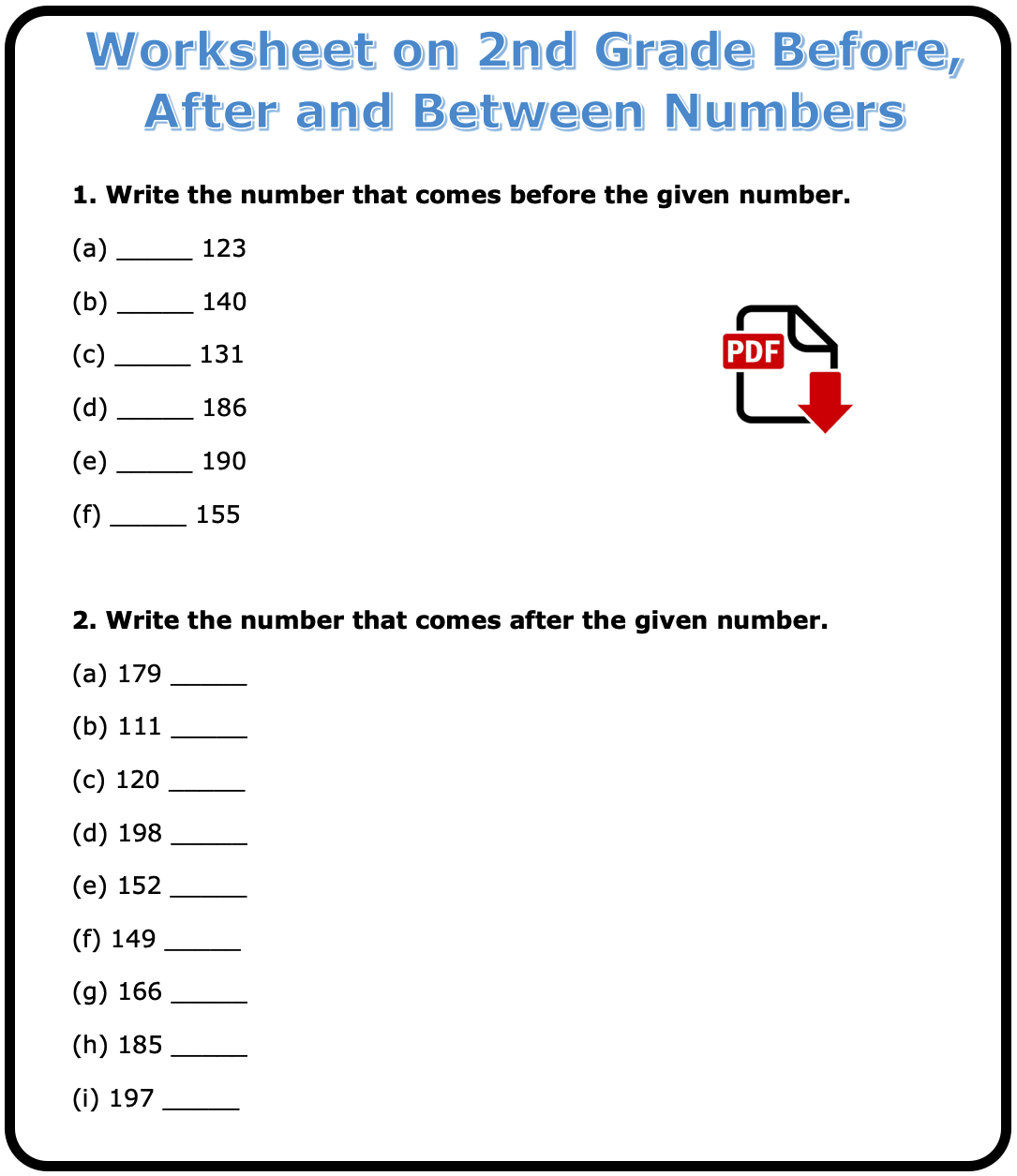
Worksheet on Before, After and Between Numbers:
1. Write the number that comes before the given number.
(a) _____ 123
(b) _____ 140
(c) _____ 131
(d) _____ 186
(e) _____ 190
(f) _____ 155
2. Write the number that comes after the given number.
(a) 179 _____
(b) 111 _____
(c) 120 _____
(d) 198 _____
(e) 152 _____
(f) 149 _____
(g) 166 _____
(h) 185 _____
(i) 197 _____
3. Choose the correct number which comes between the two given numbers. Then write the number.
(a) 108 _____ 110;
(i) 107; (ii) 109; (iii) 110
(b) 162 _____ 164
(i) 163; (ii) 161; (iii) 165
(c) 189 _____ 191
(i) 188; (ii) 192; (iii) 190
(d) 156 _____ 158
(i) 155; (ii) 157; (iii) 159
(e) 170 _____ 172
(i) 171; (ii) 169; (iii) 173
(f) 123 _____ 125
(i) 122; (ii) 126; (iii) 124
4. Write the number BEFORE (Predecessor)
(Write the number that comes just before.)
(a) ___ 45
(b) ___ 100
(c) ___ 68
(d) ___ 151
(e) ___ 300
5. Write the number AFTER (Successor)
(Write the number that comes just after.)
(a) 29 ___
(b) 74 ___
(c) 158 ___
(d) 99 ___
(e) 405 ___
6. Write the number BETWEEN
(Write the missing number.)
(a) 14, ___, 16
(b) 50, ___, 52
(c) 153, ___, 155
(d) 199, ___, 201
(e) 408, ___, 410
7. Fill in the blanks:
(a) The predecessor of 87 is ______.
(b) The successor of 120 is ______.
(c) The number between 399 and 401 is ______.
(d) The number before 1,000 is ______.
(e) The number after 609 is ______.
8. Circle the correct answer:
(a) The number before 70 is
(i) 71; (ii) 69; (iii) 68
(b) The number after 149 is
(i) 148; (ii) 150; (iii) 151
(c) The number between 32 and 34 is
(i) 33; (ii) 35; (iii) 31
(d) The successor of 500 is
(i) 499; (ii) 501; (iii) 510
(e) The predecessor of 200 is
(i) 201; (ii) 198; (iii) 199
9. Write Before, Between and After:
(a) ___ , 75 , ___
(b) ___ , 120 , ___
(c) 309 , ___ , 311
(d) ___ , 450 , ___
(e) 888 , ___ , 890
10. Write the predecessor and successor of 999.
Predecessor: ______ Successor: ______
11. Fill in the missing numbers:
245, ___, ___, 248
12. What number is between 600 and 602? ______

Answer:
1. (a) 122
(b) 139
(c) 130
(d) 185
(e) 189
(f) 154
2. (a) 180
(b) 112
(c) 121
(d) 199
(e) 153
(f) 150
(g) 167
(h) 186
(i) 198
3. (a) (ii) 109
(b) (i) 163
(c) (iii) 190
(d) (ii) 157
(e) (i) 171
(f) (iii) 124
4. (a) 44
(b) 99
(c) 67
(d) 150
(e) 299
5. (a) 30
(b) 75
(c) 159
(d) 100
(e) 406
6. (a) 15
(b) 51
(c) 154
(d) 200
(e) 409
7. (a) 86
(b) 121
(c) 400
(d) 999
(e) 610
8. (a) (ii) 69
(b) (ii) 150
(c) (i) 33
(d) (ii) 501
(e) (iii) 199
9. (a) 74; 76
(b) 119; 121
(c) 310
(d) 449; 451
(e) 889
10. Predecessor: 998 Successor: 1000
11. 246; 247
12. 601
Practicing problems like these every day helps students become faster and more confident.
Learning before, after, and between numbers is a key 2nd grade math skill. It strengthens number sense, supports counting, and builds a strong foundation for future math learning. With clear explanations, daily practice, number lines, and fun activities, children can master these concepts easily and confidently.
Whether in the classroom or at home, helping children explore number order in enjoyable ways makes math more meaningful and exciting.
From 2nd Grade Before, After and Between Numbers to HOME PAGE
Didn't find what you were looking for? Or want to know more information about Math Only Math. Use this Google Search to find what you need.



